Have you ever stepped onto a synthetic pitch and felt like you were sliding on ice? Or maybe your feet felt sore after just twenty minutes of play? I’ve been there. For years, I wore the wrong shoes on artificial turf, thinking “a boot is a boot.” I was wrong. The truth is, astro trainers are specifically engineered to handle the unique friction and hardness of sand-based and water-based pitches.
Unlike firm ground boots with long studs that can catch and cause knee injuries, astro trainers use dozens of small rubber lugs. These lugs distribute your weight evenly. This doesn’t just keep you stable; it protects your joints. Whether you are a weekend warrior in a local 5-a-side league or a serious player training on 3G surfaces, the right footwear is your most important piece of gear. In this guide, we will dive deep into everything you need to know about picking the best pair for your playing style.
What Exactly Are Astro Trainers?
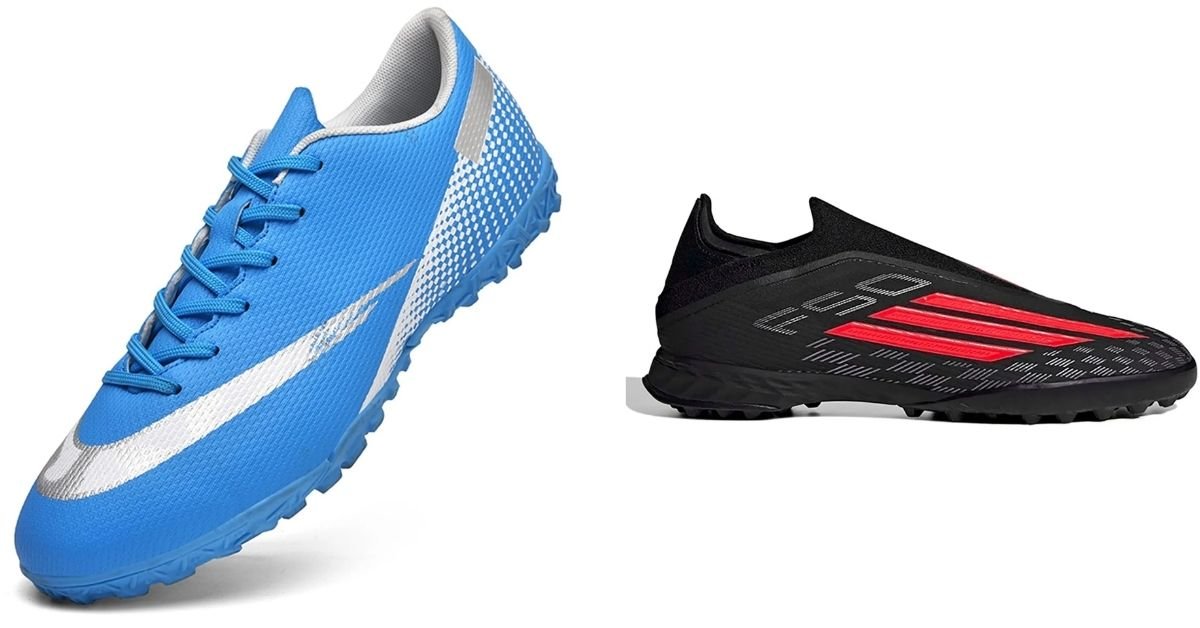
If you are new to the world of football gear, you might be confused by the terms. Astro trainers (often called TF or Turf shoes) are football boots designed with a rugged rubber outsole. Instead of the 11 to 15 large plastic studs found on grass boots, these have many small, pimple-like rubber bumps.
These trainers are built for “AstroTurf,” which is a brand name often used to describe any short-fiber synthetic carpet. Because these surfaces are often laid over concrete or hard stone, astro trainers feature extra cushioning in the midsole. This “EVA” foam acts like a shock absorber for your heels and balls of your feet. Without this padding, the repetitive impact of running on a hard surface can lead to shin splints or lower back pain. Trust me, your body will thank you for choosing a dedicated turf shoe over a flat indoor trainer or a heavy grass boot.
The Key Differences Between 2G, 3G, and 4G Pitches
Not all “fake grass” is the same! Understanding the surface you play on is the first step in buying astro trainers.
- 2G (Second Generation): These are the classic, sand-dressed carpets. They are very short and can be quite abrasive. Astro trainers are the absolute king here because they provide the necessary grip without “digging in.”
- 3G and 4G (Third/Fourth Generation): These look like real grass and use “crumb rubber” (the little black pellets) for bounce. While some people wear AG (Artificial Grass) boots here, many pros still prefer astro trainers for the added comfort and reduced risk of “stud tip” injuries.
Playing with the wrong studs on a 2G pitch is a recipe for a twisted ankle. The rubber lugs on astro trainers allow for a tiny bit of “slide” which is actually safer for your ligaments when you turn quickly.
Top Features to Look for in 2G and 3G Footwear
When you are shopping for astro trainers, don’t just look at the color. You want to look at the technology inside. First, check the upper material. Synthetic uppers are great because they don’t soak up water on rainy nights. However, many players still love “K-Leather” or calf leather for that soft, “second-skin” feel on the ball.
Next, look at the cushioning. Brands like Nike use “Zoom Air” or “React” foam, while Adidas often uses “Bounce” or “Lightstrike.” This isn’t just marketing fluff; it really helps when you are sprinting on a hard 5-a-side court. Finally, consider the lockdown. A good pair of astro trainers should wrap around your midfoot so your foot doesn’t slide inside the shoe when you make a sharp cut.
Comparing the Best Brands: Nike, Adidas, and Puma
In 2026, the big three brands have perfected their astro trainers lineups.
- Nike: Their Mercurial line is built for speed, featuring a very thin upper for a barefoot feel. If you want comfort, the Tiempo series offers soft leather and a wider fit.
- Adidas: The Predator is the go-to for control, with rubber “skin” on the top to help you grip the ball. For those who want a classic look, the Mundial Team is legendary for its durability and plush feel.
- Puma: Known for the Future and Ultra models, Puma offers some of the best “sock-like” fits on the market. Their astro trainers often feel the lightest, which is great for agile wingers.
Performance Comparison Table
| Feature | Nike Mercurial TF | Adidas Predator TF | Puma Future TF |
| Best For | Pure Speed | Ball Control | Agility & Fit |
| Weight | Very Lightweight | Medium | Lightweight |
| Cushioning | Zoom Air (Firm) | Bounce (Soft) | Nitro Foam (Responsive) |
| Fit | Narrow | Regular | Adaptive/Wide |
| Durability | 8/10 | 9/10 | 8/10 |
How to Get the Perfect Fit for Your Turf Shoes
One of the biggest mistakes I see is people buying astro trainers that are too big. You want a “snug” fit, but not “tight.” Because many turf surfaces are hard, your feet will naturally swell a little bit during a match. If your boots are too tight, you’ll get blisters. If they are too loose, you’ll lose power when you strike the ball.
A good rule of thumb is to have about half a centimeter (roughly a thumbnail’s width) of space at the end of your toes. Always try your astro trainers on with the same football socks you plan to wear during the game. Also, remember that leather shoes will stretch slightly over time, while synthetic shoes will mostly keep their shape from day one.
Maintaining Your Astro Trainers for Longevity
You’ve spent your hard-earned money on a nice pair of astro trainers, so you want them to last. The biggest enemy of turf shoes is the “crumb rubber” from 3G pitches. These tiny black pellets get everywhere. After every game, make sure to shake out your boots and wipe the soles.
Never leave your astro trainers in a plastic bag overnight. They will get smelly and the moisture can weaken the glue holding the sole to the upper. Instead, wipe them down with a damp cloth and let them air dry naturally. Avoid putting them on a radiator, as high heat can make the synthetic materials brittle and cause the leather to crack. A little bit of care goes a long way in making your boots last multiple seasons.
Common Injuries and How the Right Shoes Help
Safety is a huge part of why astro trainers exist. When you wear “bladed” studs on artificial turf, the studs can get “stuck” in the carpet. When your body turns but your foot stays planted, that is how ACL and meniscus tears happen.
The low-profile nature of astro trainers keeps your center of gravity lower to the ground. This provides a more stable base. Additionally, the extra padding helps prevent “turf toe,” a painful hyperextension of the big toe joint. By choosing astro trainers over FG boots, you are prioritizing your long-term health as much as your performance.
Choosing the Best Value: Budget vs. Elite Models
You don’t always need to spend £200 to get a great pair of astro trainers. Most brands offer three tiers: “Club” (Budget), “Academy” (Mid-range), and “Pro/Elite” (Premium).
- Club models are great for casual kickabouts once a month. They are durable but lack fancy cushioning.
- Academy models are the “sweet spot.” They usually feature decent foam and better materials without the massive price tag.
- Elite models are for the serious players. They use the exact same technology as the boots worn by pros like Mbappé or Messi, just adapted with a turf sole.
If you play more than twice a week, I highly recommend stepping up to at least an “Academy” level for the sake of your feet.
The Future of Turf Technology in 2026
We are seeing some incredible innovations in astro trainers this year. Many brands are moving toward sustainable materials, using recycled plastics from the ocean to create high-performance uppers. We are also seeing “data-driven” grip patterns, where the rubber lugs are placed in specific spots based on how players actually move on 3G surfaces.
Another cool trend is “hybrid” soles. Some newer astro trainers are designed to work perfectly on both dry turf and slightly damp artificial grass. This versatility is great for players who find themselves on different types of synthetic pitches every week. The goal is always the same: more grip, more comfort, and better ball feel.
Conclusion
Choosing the right astro trainers is about more than just looking good on the pitch. It’s about finding that perfect balance of grip, comfort, and protection. Whether you prefer the speed of Nike, the control of Adidas, or the comfort of a classic leather boot, there is a perfect pair out there for you.
Remember to consider the surface you play on, the shape of your foot, and how often you’ll be hitting the pitch. Don’t be afraid to try on a few different pairs before making your final choice. Once you find the right astro trainers, you’ll feel more confident in your turns, sharper in your sprints, and—most importantly you’ll have a lot more fun playing the beautiful game. Now, grab your gear and get out there!
Frequently Asked Questions
1. Can I wear astro trainers on regular grass?
You can, but it’s not ideal. On dry, hard grass, astro trainers work okay. However, if the grass is even slightly wet or long, you will slip everywhere because the small rubber lugs can’t “bite” into the soil.
2. Is there a difference between “Turf” shoes and “Astro” trainers?
No, they are the same thing. “Astro” is just a common nickname used in the UK and Europe, while “Turf” (TF) is the official category name used by brands like Nike and Adidas.
3. Are astro trainers good for indoor football?
Yes, they work well on most indoor “3G” cages. However, if you are playing on a flat wooden court or a lino surface (like Futsal), you should use “IN” (Indoor) shoes with flat rubber soles for better grip.
4. How long do astro trainers usually last?
If you play once or twice a week and take care of them, a good pair should last 12 to 18 months. Playing on very abrasive, old-school sand pitches will wear down the rubber lugs faster than modern 3G pitches.
5. Do astro trainers help with knee pain?
Often, yes. Because they have better cushioning (EVA foam) than traditional football boots, they reduce the impact on your joints. They also prevent the “stud pressure” that can cause discomfort on hard surfaces.
6. Should I buy a size up for football socks?
Generally, no. Most astro trainers are designed with the thickness of a football sock in mind. Buy your true size, but always try them on with your match socks to be 100% sure.