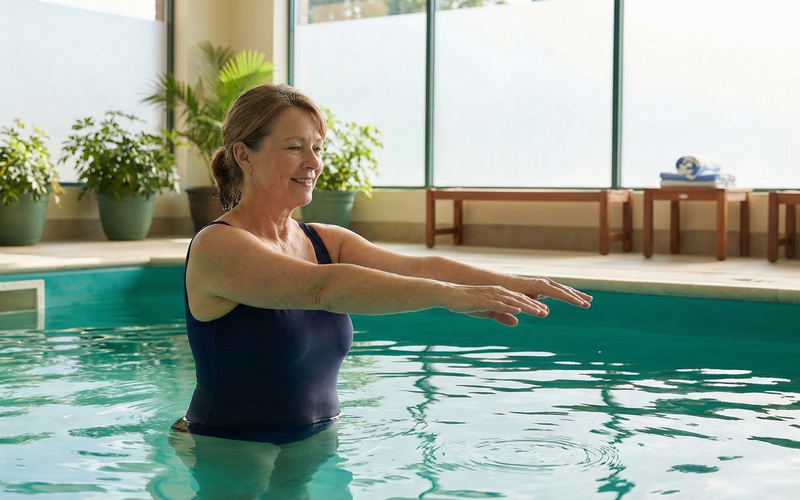
Many people look for ways to manage pain and stay active without putting too much stress on the body. For some, land-based exercise feels too hard. Joints may feel stiff. Muscles may feel tight. Movement may become limited after injury, surgery, or long periods of inactivity. In these situations, water-based approaches are often worth considering. The benefits of hydrotherapy are often linked to pain relief, easier movement, and better support for gentle physical activity.
Hydrotherapy is the therapeutic use of water. It can include warm baths, pool-based exercise, contrast methods, or other water-based routines. Some forms are used in rehabilitation. Others are simple wellness practices done at home. What connects them is the way water changes the body’s movement experience. Water supports body weight, adds resistance, and can provide warmth or cooling effects. These qualities make hydrotherapy useful for people who want a gentler path to comfort and mobility.
Why Water Feels Different From Land
To understand the value of hydrotherapy, it helps to understand why movement in water feels different from movement on land.
The first reason is buoyancy. Water supports part of the body’s weight. This makes people feel lighter when they are immersed. Because of this, less load is placed on joints such as the knees, hips, and spine. For people with discomfort during standing, walking, or exercise, that reduced loading can make movement feel more manageable.
The second reason is resistance. Water pushes back against every movement. This means the body can work on strength and endurance in a smooth and controlled way. Even slow movements can become useful exercise.
The third reason is water temperature. Warm water often helps the body feel more relaxed. It may reduce the feeling of stiffness and make movement easier to start. Cold water, in other settings, is often used for recovery after exertion.
Together, these factors explain why hydrotherapy is often associated with pain relief and mobility support.
Benefit 1: Reduced Stress on Joints
One of the most important benefits of hydrotherapy is that it reduces the amount of stress placed on weight-bearing joints. On land, each step requires the body to manage its full weight. In water, that load changes.
This can be helpful for people with joint stiffness, arthritis, reduced mobility, or general discomfort during exercise. It does not remove all effort, but it can make activity feel less harsh. A person who struggles with walking or exercise on land may find that the same movement feels easier in water.
This reduced stress is often the first reason people turn to hydrotherapy. It creates a more forgiving setting for movement, especially when the body feels sensitive or deconditioned.
Benefit 2: Easier and More Comfortable Movement
Pain and stiffness can make movement feel intimidating. When every step feels heavy, many people move less. Over time, that may lead to even more stiffness and weakness.
Hydrotherapy may help break that cycle by making movement feel easier to begin. In water, the body is supported. Range-of-motion exercises, walking, and gentle stretching may feel more comfortable than they do on land. For some people, this makes it easier to stay consistent with movement.
This matters because regular movement is often one of the keys to better function. A method that feels manageable is more likely to become a habit.
Benefit 3: Support for Pain Relief
Pain relief is one of the most common reasons people choose hydrotherapy. This does not mean hydrotherapy is a cure. It means that water can create conditions that help some people feel more comfortable.
Warm water is especially associated with this effect. It may help muscles relax and make stiff areas feel looser. The lighter feeling in water may also reduce the strain that often adds to discomfort during movement.
For some people, pain relief comes from the warmth. For others, it comes from reduced joint loading. Often, it is the combination that makes the biggest difference. When movement feels less painful, people may be more willing to stay active, which can support long-term mobility.
Benefit 4: Low-Impact Exercise With Built-In Resistance
Hydrotherapy is not only about rest. It can also support exercise. Water provides resistance in every direction. This means a person can work on strength, balance, and endurance without using heavy equipment or doing high-impact training.
This is useful for people who need gentle conditioning. The movement can stay controlled, while the body still works. A slow leg lift in water may challenge the muscles more than it seems. Walking through water can also become a meaningful form of exercise.
Because the exercise is low-impact, it may feel more sustainable for people who do not tolerate pounding or repetitive loading well. This is one reason hydrotherapy is often used in rehabilitation and low-impact fitness settings.
Benefit 5: Better Support for Mobility Goals
Mobility is not only about flexibility. It also involves confidence, coordination, strength, and comfort during movement. Hydrotherapy can support these goals in several ways at once.
Water slows movement down. This can make it easier to focus on form and control. The body may feel more stable in the water than on land. For people working on walking, balance, or simple functional movement, this can be very helpful.
It can also support gradual progress. A person may begin with simple pool walking or gentle exercises and build from there. That step-by-step progress is often easier to tolerate in water than on land, especially in the early stages of recovery or return to activity.
Benefit 6: Muscle Relaxation and Reduced Stiffness
Warm water is often chosen because it feels calming and soothing. This may be especially helpful for people who feel tight after exercise, after long hours of sitting, or during periods of stress.
A warm soak or warm-water movement session may help muscles feel less tense. It may also make the body feel more ready for gentle stretching or mobility work. In this way, hydrotherapy can support both comfort and preparation for movement.
This effect is one reason many people use hydrotherapy not just for rehabilitation, but also as part of their regular wellness routine.
Benefit 7: A More Supportive Exercise Environment
Some people avoid exercise because they are afraid of pain, strain, or instability. Water can provide a more supportive environment that feels safer and more approachable.
That feeling matters. When people feel supported, they are often more willing to move. This can be especially important for older adults, people with balance concerns, or those returning to activity after a break.
Hydrotherapy may also feel less discouraging than starting with harder land-based routines. For people who need a gentler starting point, the environment itself can be part of the benefit.
Benefit 8: A Flexible Option for Different Needs
Another strength of hydrotherapy is flexibility. It can be passive or active. It can be simple or structured. A person may use a warm bath at home for relaxation and stiffness relief. Another may take part in guided water exercise for mobility and strength.
This flexibility makes hydrotherapy relevant to a wide range of people. It can support short-term comfort or fit into a longer rehabilitation plan. It can also adapt over time. As a person’s needs change, the type of water-based activity can change too.
A Practical Approach, Not a Cure-All
Hydrotherapy has real benefits, but it should still be viewed in a balanced way. It is not the only answer to pain or limited mobility. It may work best when used as part of a broader plan that includes appropriate movement, rest, and medical guidance when needed.
It is also not right for everyone. Some people need professional advice before starting, especially if they have heart conditions, open wounds, severe respiratory problems, fever, or other health concerns that may affect safety in water.
Even so, hydrotherapy remains appealing because it offers a practical way to support comfort and movement without demanding high-impact effort.
Final Thoughts
The main benefits of hydrotherapy for pain relief and mobility come from the unique qualities of water. Buoyancy reduces joint stress. Resistance supports gentle exercise. Warmth may help muscles relax and reduce stiffness. Together, these effects can make movement feel easier, safer, and more comfortable for many people.
For those who find land-based activity difficult, hydrotherapy can offer a more supportive setting for exercise and recovery. It may not solve every problem, but it can be a valuable part of a practical approach to staying active, managing discomfort, and improving mobility over time.