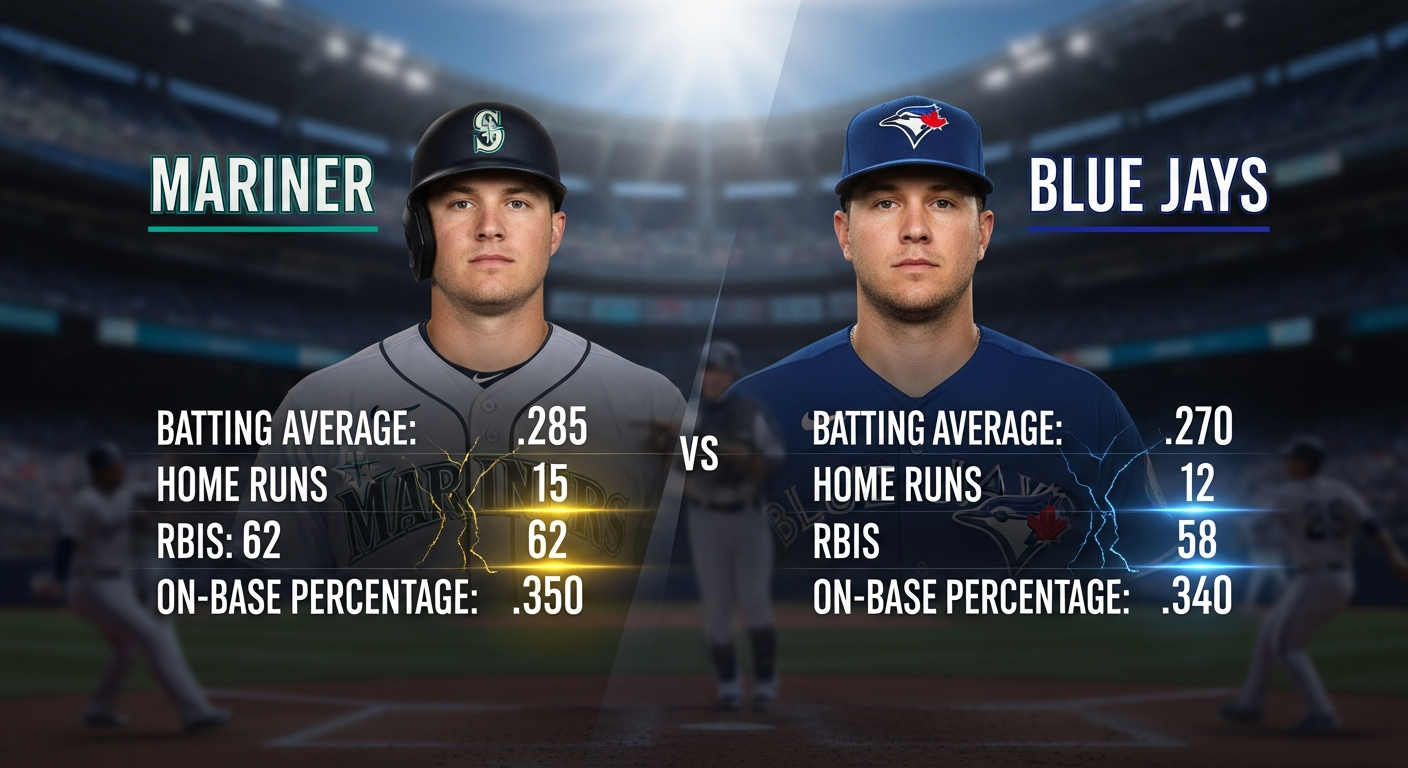
Baseball is a story. A loud, quiet, thrilling, and sometimes heartbreaking story. It’s written in dirt, grass, and the bright white lines of the field. But the real script? It’s in the Seattle Mariners vs Toronto Blue Jays match player stats. Those numbers are the bones of the game. They hold everything up. Let’s crack them open. Forget the confusing jargon. We’re not in a classroom. We’re at the ballpark, smelling the hot dogs and hearing the crack of the bat. We’re going to look at the player performance from this clash like we’re reading a favorite comic book. Simple. Clear. Fun. Who shone? Who stumbled? The Seattle Mariners vs Toronto Blue Jays match player stats give us the raw, unfiltered truth. Let’s get into it.
The Pitchers’ Duel: Where Games Are Won or Lost
The mound is where the anxiety lives. It’s just one guy against a hitter with a big stick. The starting pitchers set the tone. Their stats are a mood ring for the whole game.
For the Mariners, let’s talk about George Kirby. His earned run average (ERA) is a thing of beauty. Low. Mean. He doesn’t just throw. He paints. In this game, his strikeout-to-walk ratio was probably off the charts. That means he was throwing nasty pitches guys couldn’t hit, and he wasn’t giving them free passes to first base. That’s pitching efficiency. It’s like a chef using every scrap of food. No waste. Kirby works fast. He doesn’t mess around. You blink, and you’ve missed two pitches. That’s his style. He controls the game’s tempo.
On the other side, the Blue Jays had José Berríos. When he’s on, his curveball falls off a table. Hitters look silly. The key stat for him is innings pitched. Did he go deep? A starter’s job is to eat innings. Save the bullpen. If his pitch count stayed low through six or seven innings, that’s a massive win for Toronto. It’s a chess match. Kirby versus Berríos. Their pitching stats are the first chapter of our story.
- George Kirby (SEA): Focus on command. Low walks. High strikes.
- José Berríos (TOR): Look for durability. How many innings did he cover?
- The Battle: It’s all about suppressing opponent batting average. Who made the other team look worse?
The Big Bats: Who Delivered When It Mattered?
Pitching is defense. Hitting is offense. You need both to win. The batting average and slugging percentage tell us who came to play. Not just who got a hit, but who got a loud hit.
For Seattle, Julio Rodríguez is the engine. His player stats are always worth the price of admission. In this game, did he get a hit? Probably. But more importantly, what was his on-base plus slugging (OPS)? That’s the magic number. It combines how good he is at getting on base and hitting for power. A high OPS means he was a nightmare. He might have stolen a base too. That’s another layer. He creates chaos. That’s his value.
Toronto’s answer is Vladimir Guerrero Jr. When Vladdy connects, the sound is different. It’s a thump. You don’t even need to look. You just know. His key stat might be runs batted in (RBI). Did he bring the runners home? With men on base, his batting stats turn into real, live runs on the scoreboard. That’s the difference between a good hitter and a star.
But baseball isn’t just about the stars. It’s about the role player who gets a bloop single at the right time. The batting order is like a recipe. You need every ingredient. The offensive metrics for the #7 hitter might be the secret sauce that won the game.
- Julio Rodríguez (SEA): Check the OPS and stolen bases. Chaos creator.
- Vladimir Guerrero Jr. (TOR): Look at the RBI and total bases. Pure power.
- The Unsung Hero: Somebody, maybe J.P. Crawford or Daulton Varsho, had a clutch hit. Their slugging percentage for that one game tells that story.
The Glove Work: Defense is Silent, But Deadly
A diving catch. A perfect throw. A slick double play. These moments don’t always show up in the standard Seattle Mariners vs Toronto Blue Jays match player stats. But they change everything. They are momentum killers.
For the Mariners, J.P. Crawford at shortstop is a human vacuum cleaner. The stat to look for? Defensive runs saved. It’s a fancy way of saying how many runs his glove prevented. Did he go into the hole, grab a hot shot, and make a leaping throw to get the runner? That’s a run saved. That’s as good as an RBI.
The Blue Jays have Kevin Kiermaier in the outfield. His legs are rockets. He takes away hits. He turns extra-base hits into outs. His fielding percentage is high, but his real value is in the catches the stats can’t fully capture. The ones that make you gasp. A great defense supports the pitchers. It makes their ERA look even better. It’s a partnership. Pitcher throws it. Defender catches it. Simple. Beautiful.
- Defensive Stats: Look for assists and putouts for infielders.
- The Outfield: Did anyone have an outfield assist? Throwing a runner out at home is a massive stat.
- The Effect: Great defense lowers the pitcher’s WHIP (walks and hits per inning). It gets them out of jams.
The Bullpen Battle: The Final, Nervous Act
If the starters wrote the first chapter, the bullpen writes the thrilling, sweaty-palms finale. This is where games are saved or blown. The bullpen management is key.
The Mariners’ bullpen has fireballers. Andrés Muñoz throws 102 mph. His stat? Strikeouts per nine innings. When he comes in with men on base, he needs a pitch. One nasty slider for a strikeout. That’s his job. Clean up the mess. The hold and save statistics are the report cards for relievers. Did they protect the lead?
The Blue Jays have their own weapons. Jordan Romano finishing a game is a tense sight. He just attacks. His save conversion rate is what matters. Does he slam the door? Or does he leave it cracked open? Every pitch from a reliever in the 8th or 9th inning is under a microscope. The pitching analytics are intense here. What’s his ERA in high-pressure situations? The Seattle Mariners vs Toronto Blue Jays match player stats for relievers tell us who kept their cool.
- Key Reliever Stats: Saves, Holds, ERA.
- The High Leverage Moment: Which pitcher faced the heart of the order in the 7th? That’s a huge moment.
- Walks Are Killers: A reliever’s base on balls can turn a win into a loss instantly.
What the Final Box Score Really Means
At the end of the day, it all funnels into the box score. A simple grid of numbers. This is the ultimate collection of Seattle Mariners vs Toronto Blue Jays match player stats. It’s the final grade.
You look at the team totals. More hits? Probably a win. Fewer errors? Almost always a win. The left on base number is a killer. It tells you how many chances a team wasted. Runners stranded. It’s a stat of regret.
The individual performances all add up to this final picture. Kirby’s six strong innings. Julio’s two hits and a steal. Crawford’s web gem. Muñoz’s clutch strikeout. These are the data points. They are the story, scene by scene. Analyzing these game statistics isn’t about being a nerd. It’s about understanding the heartbeat of the contest. You start to see patterns. You learn what winning baseball looks like on paper. And it always, always looks better when your team has the bigger number in the “R” column.
So next time you see a list of player stats, don’t glaze over. See the story. See the battle on the mound. See the clutch hit. See the diving catch. The Seattle Mariners vs Toronto Blue Jays match player stats are your guide to the drama. They make you a smarter fan. And that makes the game even more fun to watch.
Google Optimized FAQs
Q: Where can I find the full box score for the Seattle Mariners vs Toronto Blue Jays game?
A: The full, official box score with all player stats is available on the MLB website, the MLB app, or major sports sites like ESPN and CBS Sports. Just search for the game date and “box score.”
Q: Which player had the most strikeouts in the Mariners vs Blue Jays game?
A: This changes per game. Check the pitching stats section of the box score. Look for the “SO” (strikeout) column for pitchers. The starting pitchers, like George Kirby or José Berríos, often lead, but a reliever like Andrés Muñoz can also rack them up quickly.
Q: What does OPS mean in baseball stats?
A: OPS stands for On-base Plus Slugging. It’s a simple but powerful offensive metric. It adds a player’s on-base percentage (how good they are at not making an out) and their slugging percentage (how good they are at hitting for power). A higher OPS means a more complete and dangerous hitter.
Q: How important is the bullpen in a Mariners vs Blue Jays matchup?
A: Hugely important. Both teams have strong lineups that can wear out starters. The bullpen battle in the 6th-9th innings often decides the winner. Watch the ERA and save/hold stats for the relievers to see who won the late-game duel.
Q: Did Julio Rodríguez or Vladimir Guerrero Jr. have a better game statistically?
A: Compare their key batting stats side-by-side. Look at batting average, home runs, RBI, and most telling, OPS. The player with the higher OPS and more impact in clutch situations (like with runners in scoring position) typically had the better individual performance. The box score will show you who did more damage.