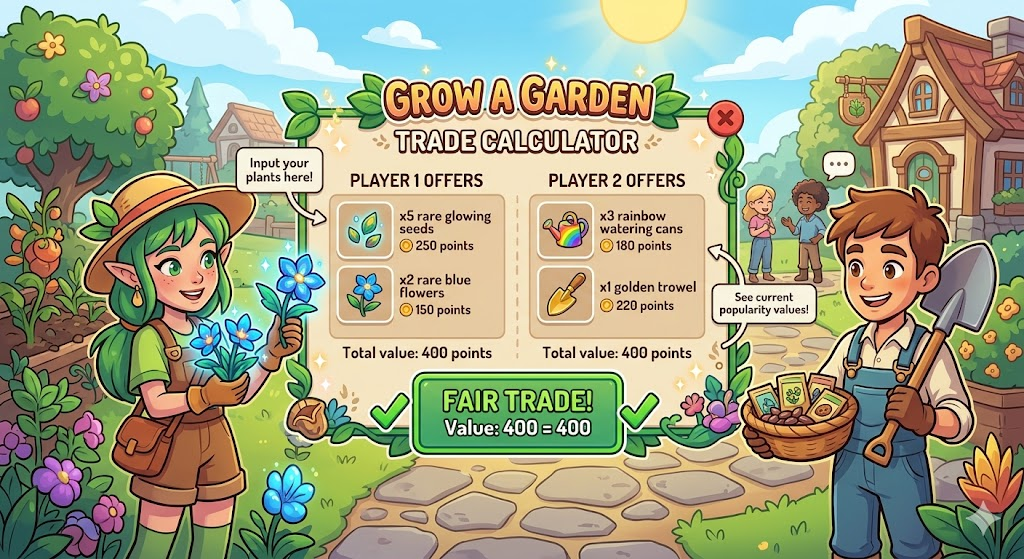
Trading is a huge part of the fun in gardening games. You might have extra seeds while a friend has a rare flower. To make things fair, you need a way to check values. A grow a garden trade calculator is a digital tool that helps you do exactly that. It looks at the items you want to swap and tells you if the deal is good.
Using a grow a garden trade calculator keeps everyone happy. It prevents you from giving away something too valuable for a cheap item. It also helps you learn which plants are currently popular in the community. Think of it like a price tag for your hard work in the soil. When you use a grow a garden trade calculator, you trade with confidence and grow your collection faster.
Why You Need a Grow a Garden Trade Calculator Today
Many new players make the mistake of guessing prices. They might trade a rare golden sunflower for a basic watering can. Without a grow a garden trade calculator, you are just guessing. This can lead to losing hours of progress in your virtual garden. Using a grow a garden trade calculator ensures you get exactly what your items are worth.
The market in the game changes all the time. Sometimes a specific fruit becomes very rare. A grow a garden trade calculator stays updated with these changes. It uses real-time data from other players to show current values. This means you always have the latest info at your fingertips. It is the best way to stay ahead of other gardeners.
How the Value of Garden Items is Decided
Have you ever wondered why some seeds cost more than others? It usually comes down to how hard they are to find. A grow a garden trade calculator looks at “rarity” first. If only ten people have a specific blue rose, that rose will be worth a lot. The grow a garden trade calculator assigns a high point value to these rare items.
Demand is the second big factor. If everyone wants a specific type of fence for their yard, the price goes up. The grow a garden trade calculator tracks what people are searching for most. It combines rarity and demand to give you a final number. This helps you understand why your trade is fair or unfair before you click “accept.”
Step-by-Step Guide to Using the Calculator
Using the grow a garden trade calculator is very simple and fast. First, you open the tool on your phone or computer. You will see two columns. On the left side, add the items you are giving away. On the right side, add the items your friend is offering you. The grow a garden trade calculator will start adding up the points instantly.
Once both sides are filled, look at the total score. If the numbers are close, it is a fair deal. If your side is much higher, you might want to ask for more. The grow a garden trade calculator makes it clear for both people. It removes the stress of arguing over prices. You can just enjoy the social part of the game.
Understanding Common Gardening Trade Terms
When you use a grow a garden trade calculator, you might see some special words. “LSI” or “adds” are common terms. “Adds” are small items put into a trade to make the values even. If your plant is worth 100 points and theirs is 90, they might “add” a small bag of fertilizer. The grow a garden trade calculator helps you find the right “adds” for any deal.
Another term is “win/fair/loss” or WFL. Most players want a “win” where they get slightly more value. However, a “fair” trade is usually best for keeping friends. The grow a garden trade calculator will often label your trade as one of these three. This quick label tells you if you should move forward or walk away.
Top Tips for Making Successful Garden Trades
Always be polite when talking to other players. Even if the grow a garden trade calculator shows their offer is bad, say “no thank you” kindly. Building a good reputation is just as important as getting good items. People are more likely to give you better deals if they like you. Use the grow a garden trade calculator as a guide, not a weapon.
Another tip is to check the values twice. Prices can shift in just one day. If you haven’t checked the grow a garden trade calculator since last week, do it again. A new update might have changed everything. Staying current is the secret to becoming a master trader. Your garden will look amazing in no time with these smart habits.
Identifying Rare and Legendary Plants
In every garden game, some items are “Legendary.” These are the gems of your collection. A grow a garden trade calculator is vital when moving these big items. You do not want to lose a legendary orchid because you didn’t know the price. These plants often have special effects or glow in the dark.
The grow a garden trade calculator helps you see the gap between “Common” and “Legendary.” Sometimes one legendary plant is worth fifty common ones. It is hard to keep track of that in your head. That is why the grow a garden trade calculator is your best friend. It keeps your most valuable assets safe from bad deals.
How to Spot a Bad Trade Offer Quickly
If someone is rushing you, be careful. Scammers often try to make you trade before you can check the grow a garden trade calculator. They might say the deal is only good for one minute. This is a red flag. Always take your time to input the items into the grow a garden trade calculator. A real friend will wait for you.
Look for “ghosting” or “switching” tricks. This is when someone changes an item at the last second. Keep the grow a garden trade calculator open in another tab. If they change the item, update the calculator immediately. This simple habit saves you from a lot of sadness. Knowledge is your best shield in any online game.
The Role of Community Feedback in Pricing
The numbers in a grow a garden trade calculator come from the players. Many tools have a voting system where people say if a price feels right. This “crowdsourcing” makes the grow a garden trade calculator very accurate. It reflects what people are actually willing to pay. It is a living system that grows with the community.
You can also contribute to this! If you see a price that seems wrong, many sites let you report it. This helps everyone else get better results. A grow a garden trade calculator works best when we all work together. It creates a safe market for kids and adults alike to trade their virtual flowers and tools.
Growing Your Collection with Smart Strategies
The goal of using a grow a garden trade calculator is to grow your inventory. Start by trading small seeds for slightly better ones. Use the grow a garden trade calculator to find small “wins” every day. Over time, these small wins add up to big treasures. It is like saving pennies in a jar until you have a dollar.
Focus on items that are rising in value. The grow a garden trade calculator often shows “trending” items. If a plant is becoming popular, try to get it now before the price peaks. Then, sell it later when the grow a garden trade calculator shows it is at its highest value. This is how the pros build those massive, beautiful estates.
Garden Trade Value Comparison Table
| Item Name | Rarity Level | Average Point Value | Trading Demand |
| Basic Daisy Seed | Common | 5 Points | Low |
| Blue Rose Bush | Rare | 50 Points | Medium |
| Golden Apple Tree | Epic | 250 Points | High |
| Rainbow Tulip | Legendary | 1,000 Points | Very High |
| Magic Fertilizer | Uncommon | 15 Points | Medium |
Frequently Asked Questions
1. Is the grow a garden trade calculator free to use?
Yes, most community-made calculators are completely free. They are built by fans of the game to help everyone trade fairly. You usually don’t even need to make an account to check basic values.
2. How often do the values change?
Values can change every day or even every hour. It depends on game updates or if a famous player starts using a specific item. Always refresh the page before a big trade.
3. Can I use the calculator on my phone?
Most grow a garden trade calculator tools are made to work on mobile browsers. This makes it easy to check prices while you are playing the game on your computer or tablet.
4. What if an item is not on the calculator?
If a new item just came out, it might take a few hours to appear. In this case, look for similar items to guess the value. Usually, the grow a garden trade calculator updates very fast.
5. Why do some people ignore the calculator?
Some players have “personal values.” They might really love a certain flower and pay more for it. The grow a garden trade calculator is a guide, but people can still choose to pay what they want.
6. Is the calculator always 100% right?
It is very accurate but not perfect. It uses averages from thousands of trades. It is the best tool we have, but you should still use your own judgment during a swap.
Conclusion
Using a grow a garden trade calculator is the smartest move any player can make. It takes the guesswork out of the game and keeps your items safe. Whether you are looking for rare seeds or just want to help a friend, the calculator ensures fairness. It turns a stressful moment into a fun part of your gardening journey.Remember to keep an eye on trends and always be kind to your fellow gardeners. With the grow a garden trade calculator by your side, you will have the most beautiful garden on the block. Ready to see what your inventory is worth? Open up a grow a garden trade calculator now and start your next big trade!